What's New in Dorchester Right Now? Two Local Stories
August 20, 2026
August 20, 2026
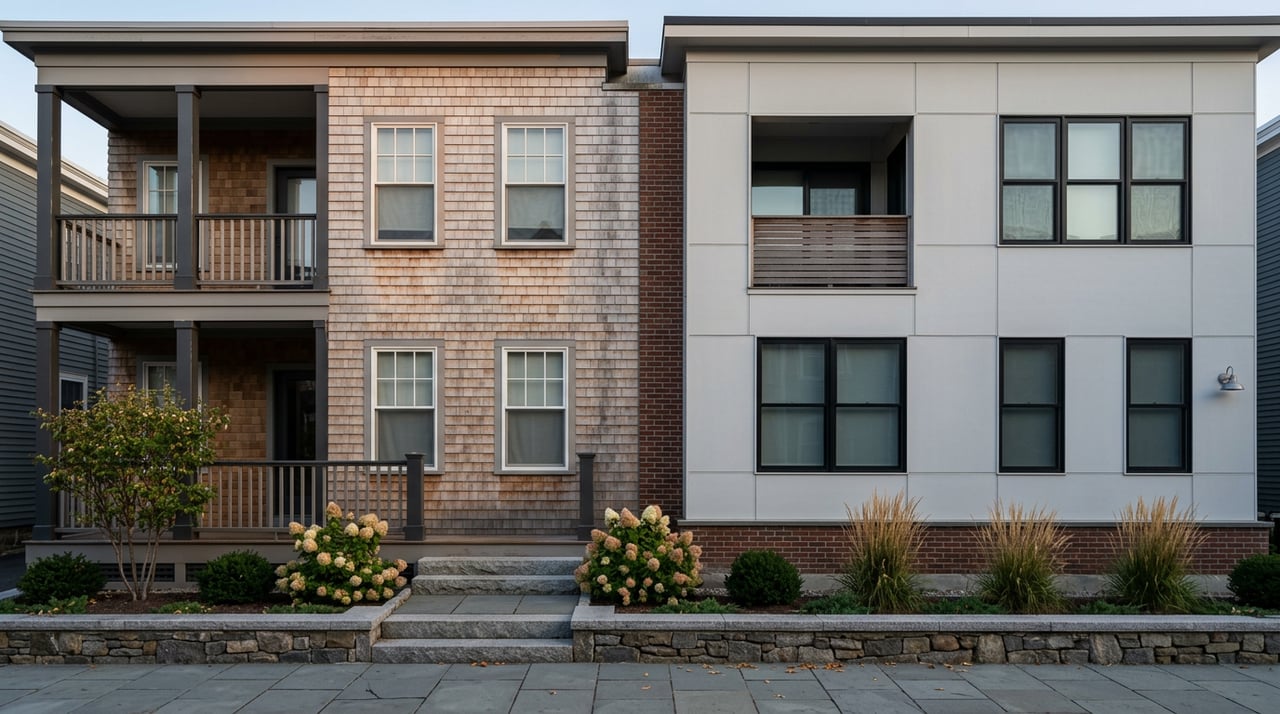
Walk from Savin Hill Station down Dorchester Ave toward Fields Corner this month and you pass exactly two kinds of restaurant: places that did not exist in January, and one that has poured beer for the same Wednesday trivia regulars since long before anyone on the internet was arguing about whether Dorchester was "arriving." That split is not a coincidence of timing. It is the actual shape of this half-mile of road in August 2026, and it tells you something truer about the neighborhood than any food blog roundup or open house flyer will.
Here's the pattern, once you see it: the new restaurants are not popping up at random. They're landing exactly where new housing has already landed, on a bet that the neighborhood's oldest institutions, three miles south in Lower Mills, are watching with open skepticism. Both halves of that story are playing out right now.
Start with what's actually new, because the pace has been fast even by Dorchester Ave standards.
Three openings along the Ave and one planned restaurant in Codman Square. None of this reads as an organic drift of hip young chefs discovering a neighborhood. The Chester opened inside brand new construction built to house the people who'd eat there. Acapella by X is a bet that Fields Corner can support a 240-seat room where a mid-size pub used to be. The pattern is developers and restaurateurs following where density already exists, or is about to.
Two blocks from The Chester's front door, the Savin Hill Yacht Club has operated continuously since 1875. It predates the tavern next to it by 151 years and hasn't needed a business plan to explain why it's still there.
While the Ave reinvents itself block by block, Dorchester Brewing Co. at 1250 Massachusetts Ave keeps running the same short list it always has: weekly beer releases, Wednesday trivia at 7 p.m., and a standing home for the Museum of Bad Art, the closest thing Boston has to an institution built entirely around a joke that never stopped being funny. Nobody is writing hot takes about Dorchester Brewing Co. because there's nothing to react to. It does the same three things every week, and that consistency is exactly why it functions as the fixed point everyone else on the Ave orbits around, whether they're a restaurant that opened in January or one still finding its footing after May.
Now go to Lower Mills, where the neighborhood's oldest public space runs on a calendar that has nothing to do with restaurant openings.
Dorchester Park was designed by the firm of Frederick Law Olmsted in 1891, part of the same Emerald Necklace system as the Public Garden and Franklin Park, and it earned a spot on the National Register of Historic Places in 2008. That makes the park 135 years old this year, and, as the Dorchester Reporter reported, its Classic Car Show returns on September 13, one of the longest-running community traditions Dorchester has. In 2024, more than 70 vehicles filled the park's bowl, including a rare 1941 Mercury Woodie and a Mustang Mach 1. This year's edition adds a DJ playing music from the eras represented on the field, a horse-drawn cart offering tours through the Olmsted-designed landscape, students from the Boston School of Music performing near the Richview Street entrance, and volunteers from Historic New England running children's activities near the Pierce House, a circa-1683 landmark that has stood on this ground since before Dorchester was part of Boston.
Nothing about that lineup is chasing a trend. It's the same instinct the neighborhood has run every September for years: gather people around something that hasn't changed, in a park that was built specifically to be a break from whatever the rest of the city is doing.
Here's where the two clocks actually collide. The same logic that put The Chester on the ground floor of new construction in Savin Hill, build housing, then build the businesses that serve it, is now the subject of a live fight over land next to Dorchester Park itself.
The former Carney Hospital site sits adjacent to the park, and a proposal to redevelop it with eight-story buildings and roughly 500 housing units drew a pointed response in an August 12 letter published by the Dorchester Reporter. Resident Carole Mooney argued that the plan's 517 proposed parking spaces would need to at least triple to serve the housing, medical, educational, and commercial uses all packed into one site. The proposal would place that scale next to a specific 28-acre, Olmsted-designed park that has spent 135 years being the one place in the neighborhood explicitly set aside from that kind of pressure.
That's the real thesis buried in this month's calendar. Dorchester isn't choosing between new and old. It's running both clocks at once, and the friction between them, three restaurant openings along the Ave and a planned restaurant in Codman Square, alongside a fight over eight-story buildings next to a 19th-century park, is the actual texture of living here right now. Neither side is winning outright. Both are true at the same time, on the same afternoon, if you know where to look.
If you're in Savin Hill or Fields Corner, the new restaurant wave is worth watching for what it signals about where density is landing next, not just where to get dinner. If you're closer to Lower Mills, the Carney site debate is worth following even if you have no plans to move, because whatever gets built there will shape how the park feels for decades, the same way Olmsted's original design has for the last 135 years.
Either way, the two versions of Dorchester aren't separate neighborhoods. They're the same one, running two different years at once, and both are worth paying attention to before either clock moves any further.
If you want a read on how any of this, new construction, a park expansion fight, or the next restaurant opening, might actually affect property values or timing in your part of Dorchester, Jamie Iacoi has lived here since 1995 and has been tracking these blocks for 17 years. Let's Connect.
Stay up to date on the latest real estate trends.


Get assistance in determining current property value, crafting a competitive offer, writing and negotiating a contract, and much more. Contact me today so I can guide you through the buying and selling process.