Moving From Boston To Milton: What Buyers Should Expect
July 23, 2026
July 23, 2026
Thinking about trading your Boston address for a little more room in Milton? That move can make a lot of sense if you want more space, easier access to open land, and a more suburban feel without going far from the city. The shift is real, though, and it helps to know what will change in your home search, budget, and daily routine before you jump in. Let’s dive in.
If you are moving from Boston to Milton, the biggest adjustment is usually not distance. It is lifestyle. Milton borders Boston along the Neponset River, but its housing pattern and street layout create a much more residential, lower-density feel.
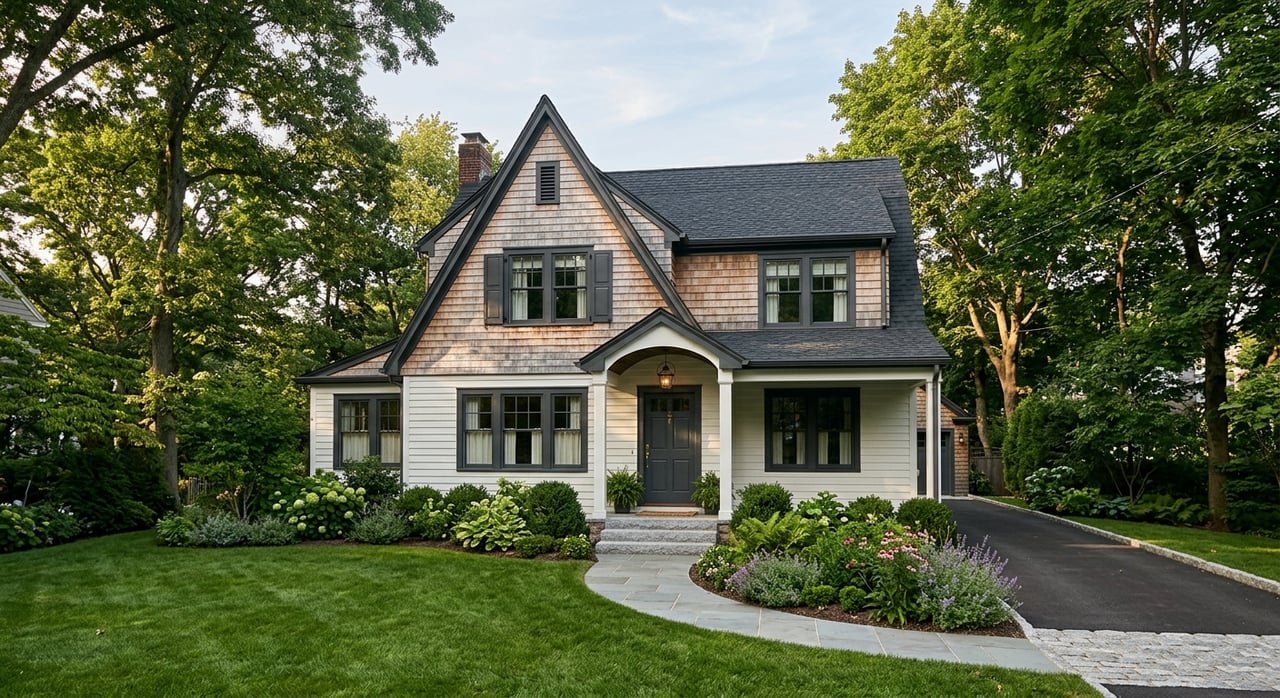
Milton describes itself as a contemporary suburban community with tree-lined streets and protected open space. The town is about 13 square miles with roughly 28,587 residents, which helps explain why many Boston buyers notice the quieter pace and greener setting right away.
For many buyers, the main draw of Milton is simple: you usually get more land and more detached housing than you would in many Boston neighborhoods. Town planning materials show that Milton is predominantly zoned for single-family homes, with minimum lot sizes ranging from 7,500 square feet in Residence C up to 80,000 square feet in Residence AA.
That zoning pattern shapes what you see on the ground. A 2022 town community preservation plan said roughly three-quarters of Milton’s housing supply is single-family, and the town’s MBTA Communities FAQ said non-age-restricted condo, apartment, and townhouse developments make up only 2.6% of the housing stock.
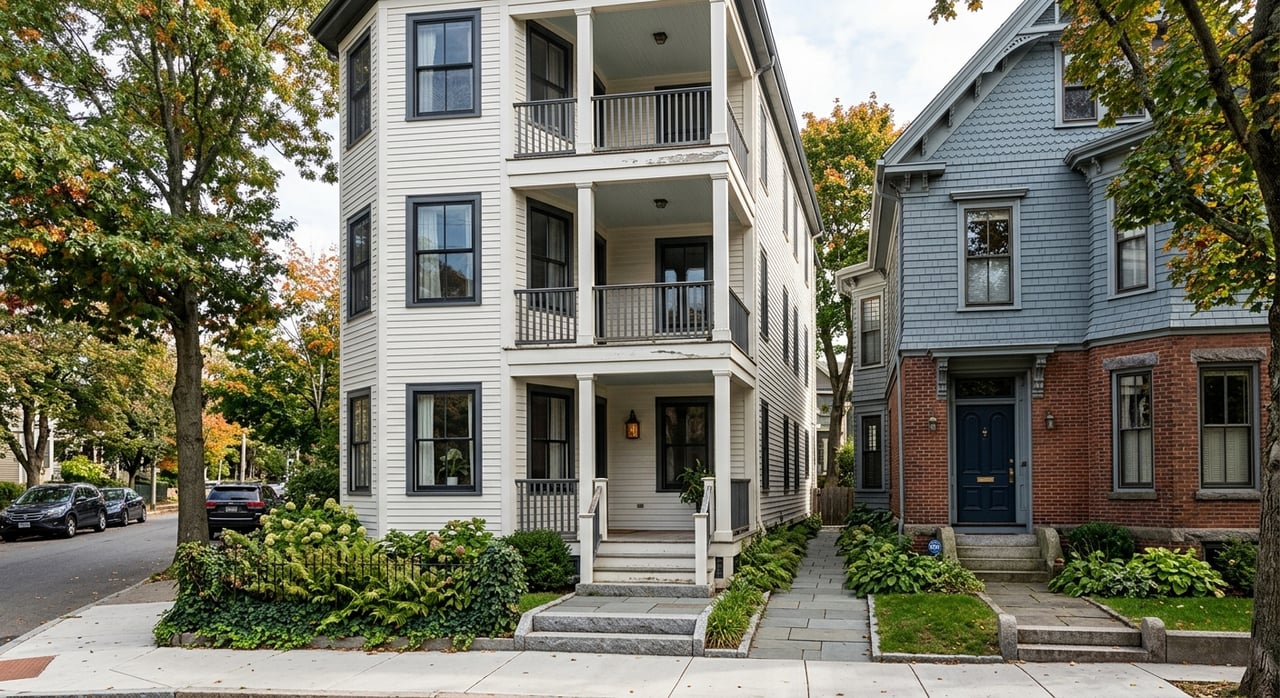
If you are coming from Dorchester or Jamaica Plain, that often means a different search experience. Instead of comparing mostly condos, attached homes, or tightly spaced houses, you may be looking at larger detached homes on bigger lots with more yard space and more separation from neighbors.
Milton’s housing also reflects a longer suburban development pattern. Town materials note a mix that includes 19th-century country houses, estates, early worker housing, and post-war single-family development.
That means your options may feel less uniform than in a typical condo-heavy Boston search. You may see older homes with more land, different floor plans, and a wider range of upkeep needs, especially compared with newer or renovated urban units.
Milton is not identical block to block. Town planning materials point to denser pockets such as East Milton Square, Northern Granite Avenue, Milton Village, and Central Avenue, while many residential areas are arranged on generously sized lots along meandering streets.
That matters if you want a certain feel. If you still want some walkable commercial activity nearby, those denser pockets may appeal to you more than quieter interior residential sections.
One of the clearest expectations to set is price. Redfin’s May 2026 data shows Milton’s median sale price at $1,004,399.
That compares with $754,746 in Dorchester and $848,715 in Jamaica Plain. In other words, Milton’s median sale price was about $249,653 higher than Dorchester and about $155,684 higher than Jamaica Plain.
For many Boston buyers, that can feel surprising at first. You are often paying more not just for the town name, but for larger homes, more land, and a housing stock that leans heavily toward detached single-family properties.
Milton’s median sale price per square foot was $544, according to Redfin. That is above Dorchester’s $463, but below Jamaica Plain’s $637.
This helps explain the value shift. The premium in Milton is not only about paying more for each square foot. It also reflects the fact that many homes come with more total space and land, which pushes overall purchase prices higher.
If you are hoping the move to Milton means an easy, low-pressure buying process, it is smart to reset that expectation. Redfin data shows Milton homes receive 3 offers on average and sell in about 20 days.
That is still competitive. Dorchester averages 2 offers and 24 days, while Jamaica Plain averages 5 offers and 20 days, so Milton may not feel quite as intense as the hottest Boston pockets, but you should still be ready to move with purpose when the right home comes up.
A practical approach matters here. You will likely want to:
This is where local context really matters. A larger lot or bigger house can be a great fit, but only if it aligns with how you want to live and what you want to maintain.
Moving from Boston to Milton often means changing not just where you live, but how you get around. The commute pattern leans more suburban, with a mix of rail access and driving.
The MBTA says the Mattapan Trolley provides light rail service from Ashmont to Milton, and Milton’s annual report says the route has four stops in town. The town also says residents have quick access to Routes 128, I-93, and I-95, and MassDOT lists a 200-space Milton Park and Ride lot for carpooling and vanpooling.
Census Reporter lists Milton’s mean travel time to work at 31.3 minutes. That reinforces what many buyers already sense: Milton is close to Boston, but daily life may be more car-oriented or more commute-planned than what you are used to in the city.
A Boston-to-Milton move can look short on a map, but your day-to-day routine may shift in noticeable ways. Before buying, it helps to think about:
These are quality-of-life questions as much as commute questions.
One of Milton’s strongest lifestyle advantages is access to open space. The town says it has the most privately and publicly conserved land within 20 miles of Boston, which contributes to the greener feel many buyers want.
The Blue Hills Reservation spans more than 7,000 acres and offers over 125 miles of trails, with free parking and no entrance fee. Friends of the Blue Hills also notes that MBTA bus routes 238, 240, and 716 stop near various trailheads.
For buyers leaving denser parts of Boston, this can be a meaningful change. You may still be close to the city, but your downtime can look very different when trails, parks, and broader natural areas are part of your regular routine.
Milton offers everyday services, but it does not function like a major retail core. The town points to local parks, Turners Pond, tennis and pickleball courts, a street hockey rink, athletic fields, Milton Public Library at 476 Canton Avenue, and commercial areas such as Milton Village and East Milton Square.
That mix tends to appeal to buyers who want convenience without dense city activity. You may find that your day-to-day needs are well covered, but the rhythm feels more town-centered and less urban.
If schools or town services are part of your move, it helps to understand the local structure early. Milton Public Schools consists of six schools, according to the town.
Even if schools are not your main reason for moving, they often influence how buyers think about location, traffic patterns, and home search boundaries. The same goes for proximity to the library, recreation facilities, and commercial nodes like East Milton Square or Milton Village.
In practice, most Boston buyers do not feel like they are moving far away. What they notice most is the change in housing type and daily environment.
The tradeoff is usually straightforward: less urban density in exchange for more land, more detached homes, and stronger access to open space. If you are coming from Dorchester or Jamaica Plain, the move is often less about leaving Greater Boston and more about choosing a more suburban version of it.
Milton can be a great move if you want more room and are comfortable with a higher price point and a more suburban routine. It may be especially worth a close look if your Boston search keeps running into the same limit: not enough space for your budget.
A smart way to evaluate Milton is to compare it against your current neighborhood habits, not just listing photos. Think about how much space you truly need, how you want to commute, and whether you want your next home to feel more connected to open space than to city density.
If you are weighing Boston versus Milton, working with someone who understands both the city side of the equation and the suburban tradeoffs can help you make a more confident call. If you want practical guidance on the move, reach out to Jamie Iacoi.
Stay up to date on the latest real estate trends.
Get assistance in determining current property value, crafting a competitive offer, writing and negotiating a contract, and much more. Contact me today so I can guide you through the buying and selling process.