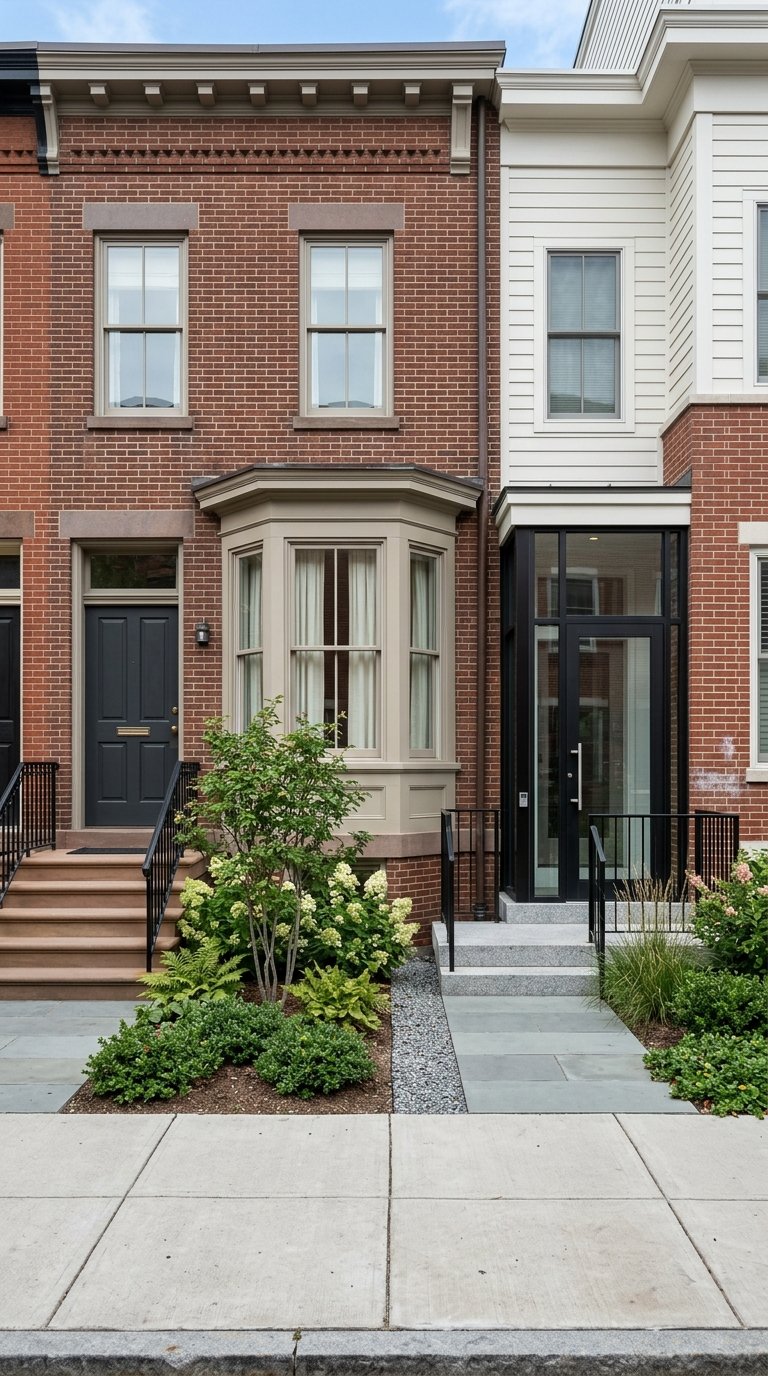
Condo Or Rowhouse In South Boston: How To Decide
July 9, 2026
July 9, 2026
If you are torn between a condo and a rowhouse in South Boston, you are not overthinking it. In this neighborhood, the choice affects your monthly costs, your day-to-day privacy, your parking situation, and how much home maintenance lands on your plate. The good news is that you can make a smart decision once you look past the listing photos and focus on how each property type fits your real life. Let’s dive in.
South Boston is a competitive market with a median sale price of $994,166 over the last three months ending May 2026. Homes have been taking about 35 days to sell and receiving about two offers on average. That means when the right place shows up, you need to know what tradeoffs you are actually willing to make.
This is also a neighborhood where the condo-versus-rowhouse decision is not just about price. Current inventory is much heavier on condos, with about 198 condos for sale at a median listing price near $1.03 million, compared with 14 townhouses at a median listing price near $1.09 million. In other words, the sticker price gap may be smaller than you expect.
In Massachusetts, condo ownership is governed by the master deed, your deed, the condo bylaws, and Chapter 183A. That means you are buying more than the unit itself. You are also buying into a set of shared rules, shared expenses, and shared decision-making.
This matters because two South Boston homes can look similar from the street and still come with very different ownership realities. A sleek renovation or classic exterior does not tell you what the condo documents say. Before you fall in love with a layout, you need to understand the building rules and financial setup.
A rowhouse-style property usually gives you more direct control over repairs, maintenance, and property decisions. You may have fewer shared rules and less association involvement in your day-to-day ownership. For many buyers, that feels more like owning a house than owning part of a building.
The flip side is that more responsibility lands on you. If the roof needs work or the exterior needs repairs, you are more exposed to those costs and choices. That can be a benefit if you want control, but it can also create bigger surprise expenses.
In South Boston, the median condo list price is only slightly below the median townhouse list price. That is why the better value often comes down to the full monthly cost, not just the asking price. A lower purchase price can still feel more expensive month to month if the condo fee is high.
When you compare homes, look at the full carrying cost. That includes your mortgage, property taxes, insurance, utilities, maintenance, and any condo or association fees. This is where many buyers find the real difference between a condo and a rowhouse.
Condo and HOA dues are usually paid separately from your mortgage and can range from a few hundred dollars to more than $1,000 a month. Those fees may cover shared expenses and master insurance for common areas. In some buildings, that can make your monthly costs feel more predictable.
Still, predictable does not always mean better for your budget. You are contributing to a building-wide budget, and that money may go toward items you use often, rarely, or not at all. If you are considering a condo, make sure the fee feels reasonable for what you are getting.
A rowhouse may come with less association expense or none at all. On paper, that can make the monthly number look cleaner. For buyers watching affordability closely, that is appealing.
But lower fixed monthly costs do not erase maintenance risk. Exterior repairs, roofing, and other large items may become your direct responsibility. If you prefer fewer moving parts in your budget, a condo fee may feel easier to plan around than uneven repair costs.
Parking is one of the biggest quality-of-life issues in South Boston. The city’s resident parking permit program gives Boston residents preferential access to on-street spaces, but South Boston also has close to 20% of all residential vehicle permits in the city, about three permits per parking space, limited off-street supply, and strong competition for curb space.
That makes parking more than a nice bonus. For many buyers, it is a major part of the decision. If you own a car, your tolerance for parking stress should be part of your home search from day one.
The neighborhood data shows why this is not one-size-fits-all. In 2025, 35.8% of resident workers drove or carpooled, 25.6% took transit, and 27.1% of households had no vehicles. Some buyers care deeply about parking, while others would rather skip the cost and use transit or other transportation options.
If you have a car, a deeded garage space or private driveway can be a major upgrade to daily life. If you do not have a car, paying a premium for parking may not make sense. This is one of the clearest examples of why the right choice depends on how you actually live.
With a condo, you will usually have more shared walls, shared entries, or shared building decisions. That does not make condo ownership bad. It simply means your home experience is tied more closely to other owners and to the building structure.
Some buyers are completely comfortable with that. Others quickly realize they want more separation, fewer shared decisions, and more freedom over how the property is maintained and used. Knowing which camp you fall into can save you from choosing the wrong property type.
A rowhouse-style home often offers a more private, house-like feel. Even when homes are attached, the ownership experience may still feel more independent. For buyers who value control and quieter day-to-day living, that can be a major advantage.
That said, you may pay for that feeling in other ways. Less shared structure often means more direct responsibility and fewer built-in services. If you want privacy without a long maintenance to-do list, the search can get more selective.
South Boston remains a strong resale market, but future buyers are likely to care about the same practical issues you care about now. Features that are easier for people to live with tend to stand out. In this neighborhood, that often means parking, outdoor space, and a manageable monthly budget.
This is why it helps to think one step ahead. A condo with a reasonable fee and useful amenities may attract strong interest later. A rowhouse with parking or appealing outdoor space may do the same. The best resale setup is often the property that solves common South Boston pain points without stretching the monthly budget too far.
If you are deciding between a condo and a rowhouse in South Boston, ask yourself these questions:
Your answers will usually point you in the right direction faster than comparing square footage alone.
In South Boston, this is rarely a simple condo-versus-house ranking. The neighborhood’s pricing, inventory mix, and parking pressure make the better choice a lifestyle and carrying-cost decision. What works best for you depends on your comfort with fees, maintenance, privacy, and curb-space competition.
That is also why local guidance matters. In a market where small differences in ownership structure and monthly costs can change the whole picture, you want advice that goes beyond the headline price. If you want help weighing specific South Boston options, Jamie Iacoi can help you compare the tradeoffs and make a decision that fits how you actually want to live.
Stay up to date on the latest real estate trends.
Get assistance in determining current property value, crafting a competitive offer, writing and negotiating a contract, and much more. Contact me today so I can guide you through the buying and selling process.